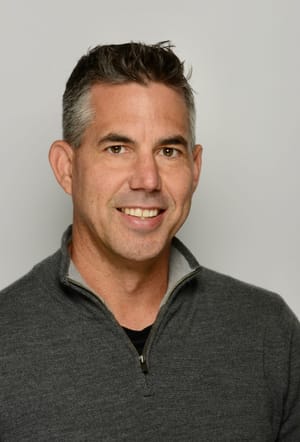
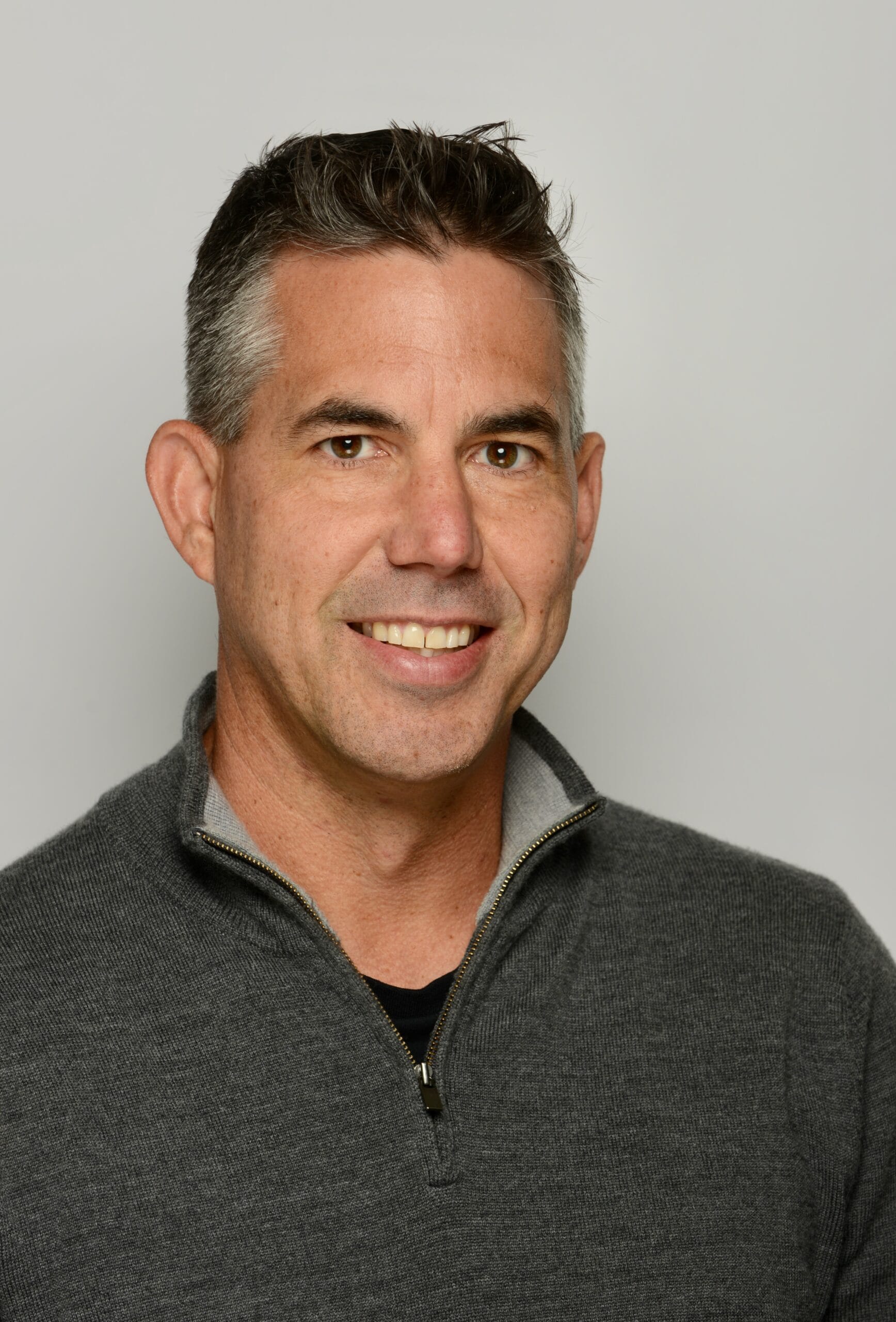
Dan Griffin on the water we’re swimming in
By Sam Katz
In one of the videos on Dan Griffin’s website, he opens with his own twist on a joke from author David Foster Wallace:
“These two fish are at the bottom of the ocean, and another fish swims up and says, ‘Hey, guys, how's the water’" And swims off with a little smirk on his face.
And the two fish look at each other and they're like, ‘What the hell is water?’”
The “water,” in this case, as Griffin explains, is full of the normative gender concepts about masculinity and femininity that surround us since before we’re born.
“ Even here in 2026, gender conditioning is so immediate that when a baby boy is born, and he's held less, he's caressed less, he's talked to in a different tone, and he's allowed to be by himself longer. And then we wonder why as adults, men struggle with attachment.”
Dan is an acclaimed author, speaker, and trainer specializing in men’s issues. He’s spent over 25 years helping thousands of men (and those who support them) to stop performing, start healing, and live with more courage, clarity, and connection. He also serves on the board of White Bison, and is the co-founder of The Center for Healthy Masculinity.
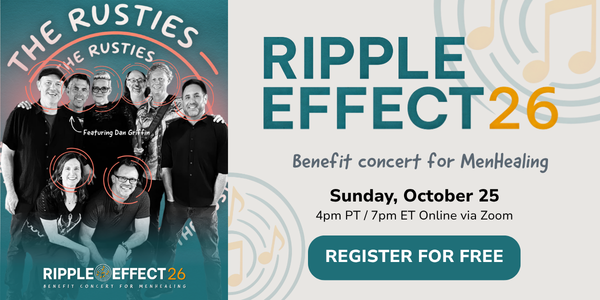
At Ripple Effect, this coming Sunday, October 25, he’s performing an original song he wrote titled “Walk Through the Pain” with his band, The Rusties. I sat down with Dan last week to ask about his work, music, and the water we’re all swimming in.
What’s in “the water” when it comes to sexual abuse of boys and men?
The focus on sexual harm has often been on girls and women, and the underlying belief that men cause all the harm. Girls and women are the victims, men are the perpetrators. That's deep in the water, right? And it’s true that about 70% of sexual harm is created by men. But we should still talk about the 30% that's created by women.
Look at the one in six statistic, right [that one in six men have been sexually harmed versus one in four women.] I think that if we really get to the truth of the situation, if we really get boys and young men to understand what's happened to them at the hands of men and women, especially between the ages of 0 and 10, we'll find that the numbers are very similar.
There is a great need for our attention to be with girls and women, and to help them heal, give them the services, love, and everything they need. And all I'm simply saying is it should be equal for boys and men.
You decided to write a completely original song, “Walk Through the Pain” for Ripple Effect, and you said you hadn’t written a song that was that personal before. What moved you to write it?
Most of the music that I've been doing for the eight years I've been in the band and the songs I've been writing, haven't been too personal. One of my drummers (we're an eight-person band with two drummers) said to me, "When your songs are the most personal, they are the best."
Like a lot of people, I have compartments of my life. I've been doing this work for a long time: I did my master's research on masculinity in the culture of Alcoholics Anonymous in 1998; I’ve published a bunch of books on addiction and gender conditioning. And I'm also in this band, The Rusties, and I love the music and the joy of playing music. But for the most part, my professional life hasn't intersected with my music. So when David Washington and Jim reached out to me for this concert, it was a complete intersection. This is my life's work in music. So for me, I was like, "Oh, wow, I haven't written this. I haven't done this." And in some ways I was like, "Why haven't I done this?"
I wanted to talk about the ripple effects of healthy living, healthy masculinity, recovery, and what happens when you walk through the pain. That has its own ripple effect. One of my favorite lines from my song, the very beginning, says, "Been searching for peace ever since I was a kid. I feel like I'm being punished for another person's sins." That, to me, is such a powerful line because that is how I felt: I didn't do it, so why am I being punished? I think that's a ripple effect.
The bridge, which is I think probably the most powerful part of the song, starts, "I only remember feeling lonely, crying myself to sleep at night, and praying to a God that never answered." That wasn't my idea. I don't write bridges. Simon, one of the band guys, was like, "I just keep hearing a bridge." We're texting, and I said, "Okay, well let me try something." And Sam, the creative process is the coolest thing. I literally wrote that bridge in like, two minutes. The chords came to me, the words came to me, boom, one after the other. I sent it to him and I asked, "You mean something like this?" And Simon's like, "Exactly like that."
What do you think healing men has to do with healing this society we’re all living in?
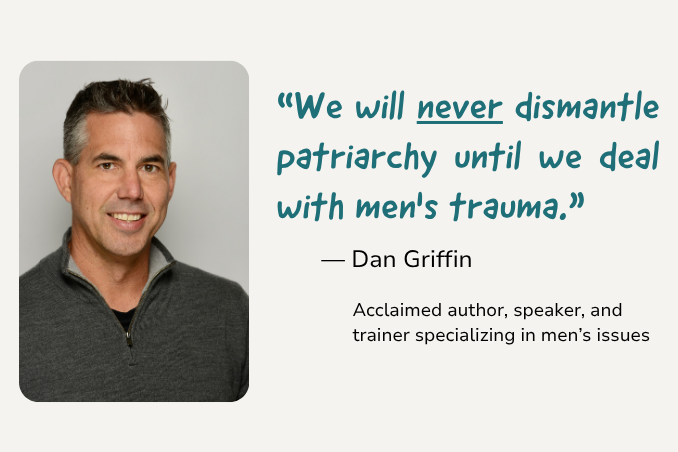
I say this 100% confidently: we will never dismantle patriarchy until we deal with men's trauma. If I could wave a magic wand and heal all of men's trauma, oh man, can you imagine what this world would look like? At the heart of men's entitlement and privilege is all of the trauma and resulting shame that shows up as, “I hate myself, so I have to be better than you. I have to be better than everybody. I have to have all the power.” That's all shame. That's all childhood trauma.
The name of this benefit concert is Ripple Effect. What does that mean in the context of men having safe spaces to be their full selves?
I really like the title of Ripple Effect, because I don't think we can take it for granted that everything has a ripple effect. The Cornell Seven has a ripple effect. I've got 32 years of recovery for alcohol and other drugs—all of that is the ripple effect of me growing up in a home of addiction and abuse. My daughter has grown up in a home of healing and recovery and love. That's the ripple effect of doing the work, of having the courage to speak your truth. If we don't have our own ripple effects, then we can't counteract all of those who have their own ripple effects stemming from a place of unhealthiness, a place of pain and woundedness, acting out with privilege and entitlement and all kinds of ugliness.
Click here to register for free for Ripple Effect 2026, our annual online benefit concert to support male survivors of sexual harm. The show starts at 7pm ET this Sunday, October 25.