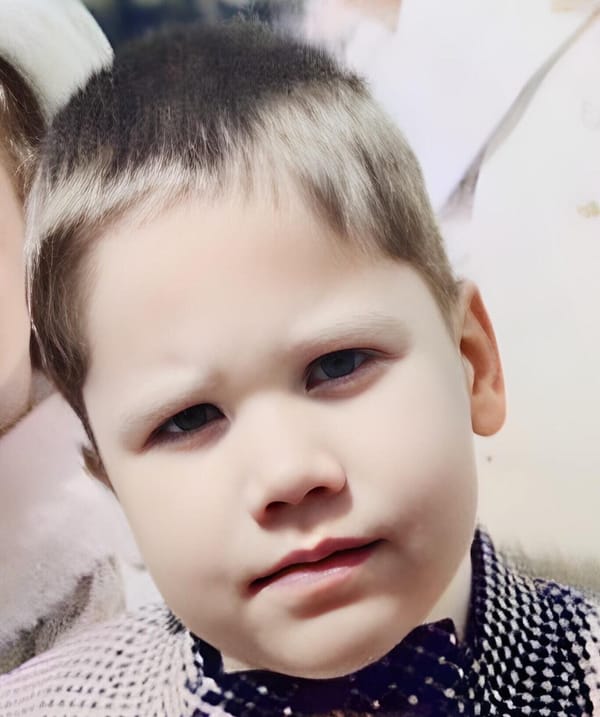
Roger Stratton joined our community after watching the Oprah Winfrey Show feature on male survivors. He attended our Weekends of Recovery in 2009 and 2011, and has since created his own support groups in pursuit of ongoing connection with other men who have experienced sexual harm.
Q: How did you get involved with MenHealing?
A: In 2009, I had just gotten married. I had a terrible trigger that came up during my marriage: it was the signing of the marriage contract. My abuser made me sign contracts when I was with him back in the day, and when I signed my marriage contract, it threw me for a terrible loop. I went really downhill. That was when I became suicidal, and terrible thoughts and feelings were resurfacing from my abuse.
I never had actually worked with it or even talked about it to anybody, and it stirred up a terrible emotion that night of my wedding. My wife knew that something wasn't right, and she wanted me to watch an Oprah Winfrey program she had recorded. It was about male survivors, and I did not want to watch it. I thought it was so ridiculous, but I actually was in the other room and happened to be listening to it, and they just sort of like… it was like talking to me, if it makes sense.
The man talking was speaking my language. And I remember stopping and just listening to him and thinking:
"I got to meet these people. These are the people I've been looking for all these years; to have somebody to talk to, to understand. They're talking my language."
So that's how I got involved with the Weekends of Recovery: As soon as it happened, me and my wife found out how to get a hold of them. I went to the [Level 1 Weekend of Recovery], and then the next year I went to [the Advanced Weekend of Recovery].
Q: What was the Weekend of Recovery experience like for you?
A: At the very first one, it was scary—very nerve-wracking. I was very timid [and] I was pretty shy when I first went in. I didn't know what to expect, of course we're all there for the same reason, but it was a great experience. It was a blessing in disguise. [...] It's a great thing to meet great people, great friends, people you understand, people you can talk to.
I’ve always loved people. So when I heard these men's stories, I just felt so bad for them, even though I had similar [experiences]. I didn't care about myself at the time, I was more concerned about their well-being. I really had a hard time [not] empathizing with everybody.
They kept saying, “You can't do that. You can sympathize, but don't empathize because you sometimes get pulled into them. You gotta take care of yourself first.”
But since I've been out 15, 16 years, [I learned] you can make it through this. You can survive, you can thrive, when you get the tools you need.
When I was abused, my soul was tainted. Before I went to a Weekend of Recovery, I was sort of dead inside—that's how I would always describe my pain. Since the Weekend of Recovery, I've been thriving.
Q: How have you kept your recovery going after attending a Weekend?
A: When you go to a Weekend, at the last day, you don't wanna leave because it's like a village. It's such a bizarre feeling—it's almost like euphoria. You found your village, or people, right, and then you have to go back to the real world.
When you go back to the real world, you really want to make sure you keep the connection because that's what's going to keep you grounded.
If you're not careful and you go back, you can get lost, and it's not a good feeling; to be lost again and have to rekindle everything when you just try to keep it going when you walk out.
The Weekend of Recovery, it's just the beginning. It's just the beginning—the root to start growing, have it just go everywhere, and to be able to suckle from it. The Weekend is just the tip of the iceberg of what can be done in life.
I do highly recommend any men that have been to a Weekend of Recovery to keep in touch with one another, or to form their own group if they can, because it is very helpful in the long-term.
Q: Can you share more about the group you’ve started?
A: I actually started a group in Indianapolis, I have two groups going: We have our original group that met at the first Weekend of Recovery, and then we all went to the second Weekend and met a couple of extras that joined into the group.
Eight of us from that [first Weekend of Recovery] have gotten together, we've been talking ever since the last 16 years now.
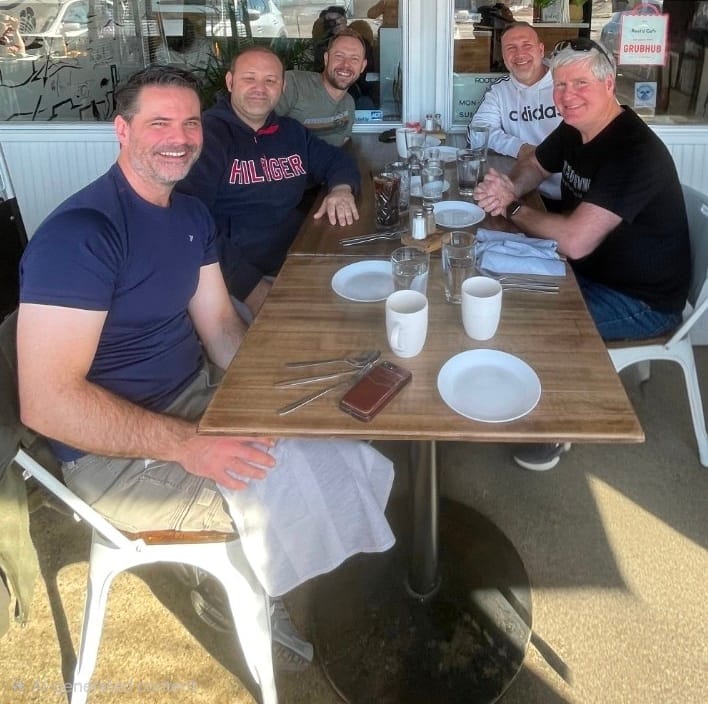
We go out once or twice a year, we'll go on vacation together and we'll meet up and talk to each other, make sure everybody's doing well. We constantly text or email and phone call to keep in contact with each other.
Some of us have moved on a little bit, you know, some got married and some moved, got different jobs [...] We've seen great progress for everyone in our group since we’ve left the first Weekend.
Q: What’s the difference between your Level 1 and Advanced Weekend of Recovery experiences?
A: A Level 1 Weekend of Recovery is very, very specific, as it can be very daunting. It can be very stressful at the beginning. You're trembling at the doors, you know, but when you go to an Advanced Weekend, you're running to get into the doors because you know what you're gonna get. Your soul is wanting to be fed through friendships and that kind of stuff.
Q: How do you personally find healing and keep your recovery journey going?
A: I find it through inner strength. I find it knowing that I've met other people who have dealt with the same thing, and so when I'm feeling down or when I'm having issues, I normally will go and talk to them.
I listen to a lot of music. I do a lot of landscaping, I like doing projects. I think it takes my mind off things. I'm a big worker—I love to work. I don’t sleep much, but I work a lot and I think that keeps my time occupied.
My little motto is saying: I am maybe 85% cured. I'll never be 100% no matter what I do, what I take, what help I get. I'll never be 100%, but I can live with this. It's very capable to live with 80% of being cured or helped, mentored through this trying time.
Q: Can you share more about your story?
A: I don't think I ever remember having a trigger until my wedding. The contract is what got me all worked up and the abuse really came out at that time. I'm not saying it wasn't never there, but it was nothing like it was the night of my wedding when I signed that contract. It sort of reminded me of signing my contract with my abuser.
If I did not do what it said in the contract, I'd be punished, so being tied and bonded to someone was not what I thought it was, you know, at a wedding.
It didn't even dawn on me. I mean, I remember having the pen in hand, and as soon as the preacher handed it to me and I signed it, I felt like I was jumping out of the building.
You can even see my face in pictures and wedding photos—my eyes are glazed over. I can't explain how terrible the feeling was that night, how severe a trigger can be.
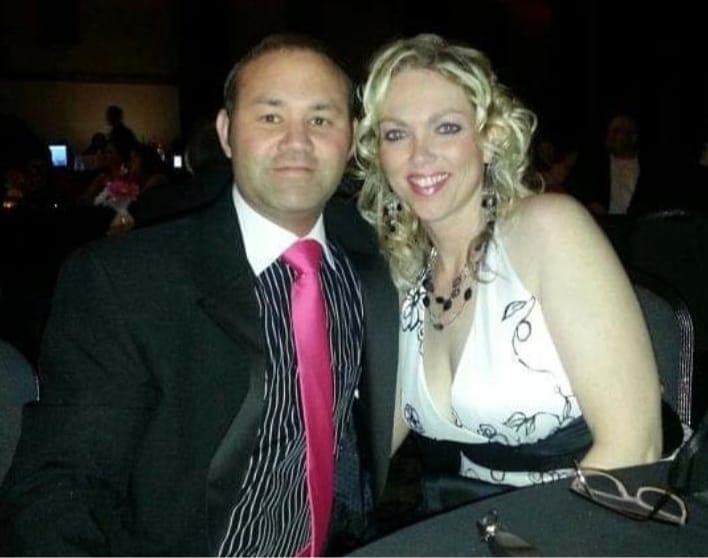
Q: How did you navigate through this revelation with your partner?
A: Well, my wife, she knew something was wrong [...] she could see right through my soul. She took me to the side and said, “Roger, I know something's wrong. We need to get you help.” I think that's what led her to the Oprah Winfrey show.
My wife was a great help for me. She was my rock at the beginning, before [I attended a Weekend of Recovery]. Then, I didn't have to lean on her as much because the other guys [from my group] sort of took her place when it came to that kind of stuff, but she was the one that got me the help.
If it wasn't for her, I never would have watched the Oprah Winfrey show. I never would have found the Weekends of Recovery because I live in a small town—426 people. We didn't have the resources for [healing from abuse].
Maybe if I never did get married, never did sign a contract, maybe [the trigger] wouldn't have [manifested], I don't know. I’ve signed contracts to buy vehicles and bank loans, but they don't faze me at all.
When I look back at my life, to me it's like a dream and I wonder, “Am I making this up? Did it really happen?”
Sometimes I pinch myself to realize it was really true; It's not something I made up.
Q: What words of advice or encouragement would you give to other male survivors?
A: If you have the enthusiasm and you've got the capability of starting a group or continuing a group from where you're at, I really encourage [you to do so.]
People like me, with an outgoing personality, should be out there helping get people started in [finding community].
There's gonna be a lot of shy people but if you're an extrovert, you can really help. The introverts will come to you and they'll participate, and that is a great thing.
I do encourage anybody that is like me, if you have the will and the drive, you should really make it a mission in life to do [help others heal].